

TV Buying Guide
Overview
Shopping for a TV has become a bit more complicated in recent years, mainly due to the spread of new features and options.
Go shopping and you’ll see plenty of Ultra High Definition (UHD), or 4K, TVs, and even a growing number of 8K TVs, which promise better picture detail than HDTVs, along with improved contrast and color. So one of the questions you’ll face if you’re buying a larger TV is whether it’s time to move up to one of these new 8K UHD sets or stick with a standard 4K model.
Many sets feature High Dynamic Range (HDR), which promises brighter, more dynamic images and more vivid, realistic colors. However, not all TVs deliver good HDR performance, and those that do tend to be more expensive, giving you another choice to consider.
Finally, Consumer Reports members may notice that OLED TVs dominate our ratings for larger TVs. These sets are more expensive than the LCD/LED models that make up most of the TVs on the market—although the price gap narrows every year—so you’ll need to decide whether OLED is worth the extra cost.
Once you know the type of TV you want, you can focus on getting the right screen size and on a few other important features and performance characteristics.
New Television Technology
LCD TVs Are Improving.
While OLED TVs top our ratings, the best-performing LCD TVs continue to improve every year, coming closer to OLED-like performance. One reason is the introduction of full-array backlighting, in which LEDs are arranged across the entire back of the panel rather than just along the edges of the screen. This design is combined with a feature called local dimming, where the LEDs are divided into zones that can be brightened or dimmed independently. The result is darker-looking dark areas and a reduced likelihood of seeing halos around bright objects on dark backgrounds.
Now there’s a new development in LCD/LED TV technology called Mini-LEDs, which takes local dimming a step further.
By shrinking the size of the LEDs in the backlight, manufacturers can use many more of them in the same area. In fact, these sets can boast thousands of tiny LEDs behind the LCD panel. These are divided into dimming zones, and because the LEDs are so small, there can be many more zones—say, a thousand instead of the dozens found in the best LCD TVs so far. The zones can also be controlled more precisely.
By increasing the TV’s dynamic range—the difference between the brightest white and the darkest black the screen can display—Mini-LEDs can also help boost HDR performance, which is discussed in more detail below.
Put all of this together, and Mini-LED sets can perform more like OLED TVs while retaining some traditional LCD advantages, such as higher brightness and a wider range of brands and screen sizes.
There are two other TV technology trends to consider this year: 8K TVs and Next-Gen TV, the term used for the new over-the-air broadcast TV system for those who use an antenna.
8K TVs have arrived at premium prices.
Although 8K TVs first appeared two years ago, they have so far made up only a small fraction of TV sales. One reason is that the extra detail these TVs provide—33 million pixels compared with 8 million in a 4K set—really becomes noticeable only on the largest TVs. New 8K TVs are also expensive.
This year, we expect to see more 8K sets from more brands, with screen sizes starting at 65 inches.
While all those extra millions of pixels promise sharper, more detailed images than you can currently get from 4K UHD TVs, that doesn’t mean an 8K set makes sense for most people. For one thing, you won’t find any native 8K content to watch on these sets, at least for a while.
Over-the-air TV is advancing as well.
Finally, there’s Next-Gen TV, technically known as ATSC 3.0. This refers to a new standard for broadcasting over-the-air signals. Next-Gen TV is still available in only a few areas of the country, but more are coming. The standard allows TV signals to carry more data, so broadcasters can begin offering 4K programs and movies with HDR that are transmitted to regular TV antennas. The new standard is IP-based (Internet Protocol), which allows some broadcasters to offer over-the-air TV packages that combine traditional broadcast channels with a few lifestyle networks you’d normally get from a cable TV provider or a streaming service like Sling TV or YouTube TV.
With Next-Gen TV, you may eventually be able to receive TV programming and other content on smartphones, tablets, and even in moving vehicles. Broadcasters also promise improvements to emergency alert and weather warning systems.
To receive these new TV signals, your TV will need an ATSC 3.0 tuner, something most current TVs don’t have. Only a few sets include one. However, this probably isn’t something you need to worry about if you’re shopping for a TV. We expect companies to begin selling adapters that will allow other TVs to receive Next-Gen TV signals.
While TV shoppers will see new technology in 2021, much of the basic information you need to choose a TV remains the same. Below is what you need to understand about screen size and other factors to make an informed decision.

Screen Size
Do you remember when a 50-inch TV seemed huge? Well, TVs with 55- and 65-inch screens are now common. Deirdre Kennedy, business manager at retail market research firm Gap Intelligence, which works with Consumer Reports, says that in 2021 industry experts expected prices for these larger sets to drop—as they had in the previous two years—and that more people would buy them. Paul Gagnon, senior research director at market research firm Omdia, said he expected 60- to 69-inch TVs—most of them 65-inch models—to account for 18 percent of U.S. TV sales in 2021, up from just 12 percent in 2018. Even larger TVs, measuring 70 inches or more, were expected to make up 10 percent of sales.
There are no hard-and-fast rules for determining the right TV size—personal preference, field of view, and even visual acuity all play a role. However, if you want some guidance, you can try one of the many free calculators available online, or use the following formula.
If you’re buying a 1080p set—which has become uncommon in larger screen sizes—the closest you should sit to your TV while maintaining an appropriate maximum field of view is 1.6 times the diagonal measurement of the TV. So if you have a 60-inch screen, you should sit at least 96 inches (or 8 feet) away.
You can simply reverse the math if you want to start with viewing distance. Measure the distance from your couch to the TV in feet, divide that number by 1.6, then multiply the result by 12 to get the screen size in inches. If you’ll be sitting 8 feet away from where you plan to place the TV, you’ll end up shopping for a 60-inch TV. (You can make the math easier by measuring everything in inches.)
But don’t feel that you have to do the math. These days, almost all larger sets are 4K UHD models. Because these TVs have a higher pixel density, you can go bigger and sit closer—your viewing distance can be as close as the screen’s diagonal measurement. So, for example, with a 65-inch UHD TV, you can sit about 5 feet away.
Just remember that the goal is to create a comfortable, immersive viewing experience. You don’t want to be so close that you can’t see the whole picture, or so far away that you lose the high-definition detail you’re paying for.
You’ll also need to pay attention to your budget. Below are approximate price ranges for various screen sizes. In general, the larger the screen, the more expensive the TV. Of course, performance matters too—for a given price, you can often get a smaller TV with better performance or a larger TV with lower performance.
Specifics and General Considerations of the Decision
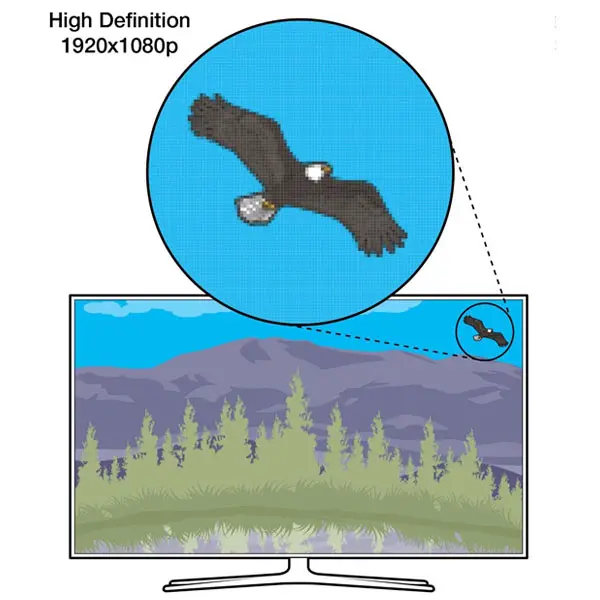
A standard high-definition (HD) set is also called a 1080p model because its screen resolution is 1920 × 1080. That means it has 1,920 pixels horizontally and 1,080 pixels vertically, for a total of about 2 million pixels. Think of pixels—short for “picture elements”—as the tiny individual dots that make up a TV image.
Ultra High Definition (UHD) TVs, also known as 4K TVs, have a screen resolution of 3840 × 2160, giving them about 8 million pixels—four times as many individual pixels as an HD set. The densely packed pixels in UHD sets allow them to display more image detail. The advantages of a UHD TV are most noticeable on larger screen sizes—say, 65 inches and up—or when you want to sit closer to the TV than you could with a 1080p set.
We’re also now starting to see the first so-called 8K TVs, which have a screen resolution of 7680 × 4320, with more than 33 million pixels. This is the highest resolution defined in the UHD standard, so these sets are technically also UHD TVs. For now, there aren’t many of them, and they’re usually somewhat more expensive than similarly sized 4K sets.
We don’t recommend buying an 8K set right now, because you’ll pay a premium and there’s almost no 8K content available yet. These days, buying a 4K TV makes the most sense, especially in larger screen sizes where it’s becoming harder to find HD sets. You can still find 1080p and 720p TVs in smaller screen sizes—say, 32 inches or smaller.
There’s now a decent amount of 4K content to watch, especially from streaming services like Amazon and Netflix. There are also 4K Ultra HD Blu-ray players that can play 4K Blu-ray discs, and we expect more options to appear in the market over time.
Another advantage of 4K TVs is that most of them now support High Dynamic Range (HDR) and a wider color gamut, resulting in more vibrant, natural-looking images. To learn more about HDR, see the HDR section below.
1080p TV (Full HD Television)
A high-definition TV, with a resolution of 1920 × 1080, will be suitable for most viewers and will save you some money compared with a similarly sized UHD set. Nearly every 1080p set available is an LCD TV with LED backlighting, though there are also a limited number of 1080p OLED TVs.
At the moment, it’s hard to find a UHD TV smaller than 39 inches, although we do have a 32-inch 4K model included in our ratings. We’ve found that many viewers aren’t able to see the extra detail in a UHD TV from normal viewing distances until screen sizes become quite large—for example, 65 inches and above.
Just remember that resolution is only one of several attributes a TV needs to get right to produce excellent overall picture quality. Standard high-definition TVs remain a great option for many consumers when you consider the price, especially in screen sizes smaller than 65 inches.
4K / 8K UHD TV (Ultra High Definition Television)
Thanks to its high-resolution 3840 × 2160 screen, a 4K TV can display more detail than a 1080p set when showing high-quality UHD content. The new 8K TVs, with 7680 × 4320 screens, are capable of delivering even finer detail. Images on these sets appear sharper, with smoother lines along object edges, depending on viewing distance.
Many UHD sets also try to enhance the picture in other ways. For example, many of the best TVs now feature advanced video processing and use artificial intelligence to upscale lower-resolution content to 4K or 8K screens. Most 4K sets now support HDR, which provides a higher level of contrast between the brightest and darkest parts of the image.
The latest UHD TVs also expand the range of colors the TV can display, though taking full advantage of this requires specially produced content. Each year, more content encoded with HDR becomes available.
High Dynamic Range (HDR)
High Dynamic Range (HDR)
As mentioned earlier, High Dynamic Range (HDR) is one of the most exciting recent developments in television technology. When done correctly, HDR enhances a TV’s brightness, contrast, and color, making on-screen images look closer to real life.
For example, when HDR is active, you can see details that might otherwise be lost—like the texture of tiles on a shaded walkway or subtle variations in white clouds in a daytime sky. You’ll also notice brighter, more realistic “highlights,” such as sunlight reflecting off a chrome car bumper or an airplane wing. HDR makes those highlights stand out; without it, they might blend into other bright areas.
HDR achieves this by increasing the contrast between the brightest whites and the darkest blacks the TV can produce—hence the term “dynamic range.”
“When done well, HDR delivers a greater sense of natural lighting in images,” says Claudio Ciacci, head of Consumer Reports TV testing. “HDR can flex its dynamic range in sunlit scenes that push a TV’s contrast to the max, but you’ll also see subtle benefits in more simply lit scenes.”
HDR TVs typically produce more vivid, varied colors than other TVs. This is often paired with Wide Color Gamut (WCG). Standard HD TVs can display about 17 million colors, while WCG-enabled TVs can display up to a billion colors—like giving your TV a much bigger box of crayons to work with.
However, you won’t see all this contrast and color richness all the time. You need to play a movie or show mastered for HDR and WCG to take advantage of it. 4K HDR content is now available from streaming services, 4K Blu-ray discs, and satellite providers like DirecTV, with more expected over time, including via new over-the-air broadcast standards.
Types of HDR
HDR is not just one technology; there are several types with different technical specifications.
HDR10 – An open standard supported by all 4K HDR TVs and 4K Blu-ray players. It uses static metadata, meaning brightness levels are set for the entire movie or show.
Dolby Vision – A proprietary HDR type with dynamic metadata, allowing brightness to be adjusted scene by scene or even frame by frame. It’s generally considered an enhanced version of HDR10 and requires licensing.
HDR10+ – Similar to Dolby Vision, it also uses dynamic metadata. It is primarily supported by Samsung and Amazon for streaming.
HLG (Hybrid Log-Gamma) – Mainly relevant for next-generation over-the-air broadcasts (ATSC 3.0). Many new TVs already support HLG, with firmware updates available for others.
Not All HDR TVs Are Equal
Not every TV labeled “HDR” produces rich, vibrant images. This is why Consumer Reports now provides a separate HDR rating.
Some HDR TVs aren’t bright enough to deliver true HDR. Peak brightness is measured in nits: high-performing HDR TVs typically reach at least 600 nits, with the best hitting 1000 nits or more. Many low-powered HDR TVs produce only 100–300 nits, which results in less impactful highlights.
“The benefits of HDR are often lost on modest displays,” says Ciacci.
How to Choose a Great HDR TV
You can’t rely solely on packaging or in-store images. Some TVs feature the Ultra HD Premium logo, indicating certification by the UHD Alliance, but not all brands maintain this.
The best approach is to consult TV ratings, which now include an HDR score. TVs with excellent HDR tend to be more expensive, but there are also good budget-friendly options, especially for smaller sets or if you’re willing to wait until more 4K HDR content is available.
Facts About Smart TVs
The vast majority of TVs on the market, especially mid-range and larger models, are smart TVs. These TVs can access online content, such as video streaming services like Amazon Prime, Hulu, and Netflix. Basic smart TVs may be limited to the most popular services, while others offer a wider range of apps. More advanced smart TVs can respond to voice commands, either through built-in microphones on the remote or via a smartphone app.
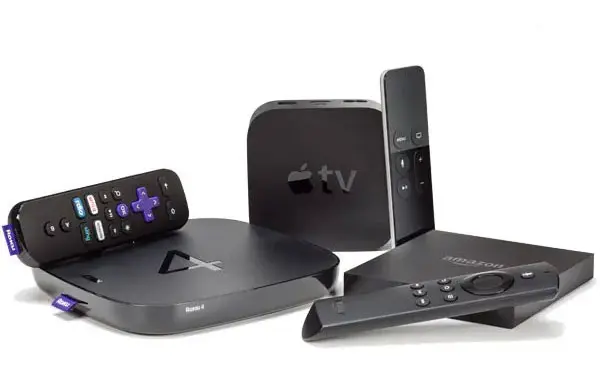
According to market research firm Omdia, more than 80 percent of TVs sold today are smart TVs. However, if you’re considering a basic TV or already have a TV without smart features, you can easily add internet capability using a separate streaming media player, such as Amazon Fire TV, Apple TV, Google Chromecast, or a Roku player.
Some manufacturers have developed their own smart TV platforms, while others use a licensed system, like Amazon Fire TV, Google’s Android TV (now rebranded as Google TV), or Roku TV. A TV with built-in smart features makes accessing content easy—there’s just one remote—but a separate streaming media player may offer more content options or a user interface that makes finding and accessing content simpler.
More TVs today come with support for third-party digital voice assistants like Amazon Alexa, Apple Siri, and Google Assistant. This allows you to perform basic TV controls—such as adjusting volume, changing channels or inputs—and search for shows and movies using voice commands. Sometimes, you can also control other compatible devices, like smart speakers, lights, or thermostats, directly from the TV.
Keep in mind, however, that almost all smart TVs collect information about the programs you watch and the apps you use for marketing purposes. The degree to which you can control this data collection varies by brand, but there are ways to limit how much data is collected and shared.
Streaming Media Players
Streaming media players are a common add-on for TVs, delivering movies, TV shows, music, and games to TVs that don’t have internet access. Even if you have a smart TV, you might consider a streaming player if it offers features or services your TV doesn’t have, or if it performs better.
There are more than ten models of streaming players, offered in two main styles: set-top boxes and stick-style devices roughly the size of a USB flash drive. The simplest models support 1080p video, while many can play 4K content with HDR from supported streaming services.
Keep in mind that streaming video requires a broadband connection and strong Wi-Fi to prevent freezing or buffering. If you move more of your entertainment online, you may need to upgrade to a faster internet connection.
Smart TVs
Smart TVs, also called Internet TVs or connected TVs, are your gateway to a world of online content that you can access directly from the TV itself. Most smart TVs today allow you to access multiple video streaming services like Hulu, Netflix, Sling TV, and YouTube TV, as well as one or more online music services such as Pandora or Spotify. Many smart TVs also let you check social media sites like Facebook and Twitter, and many support casual gaming as well.
More smart TVs now come with voice capabilities, either through their own AI technology or by working with third-party digital assistants like Amazon Alexa and Google Assistant (some models may support both). Some major-brand TVs can also connect and interact with other smart home devices, allowing you to play music on smart speakers, adjust the thermostat, or control smart lights—all from your TV.
Like streaming media players, smart TVs must be connected to your home network. A wired Ethernet connection is recommended when possible, but all smart TVs now also include built-in Wi-Fi for wireless access.

Check the Viewing Angle
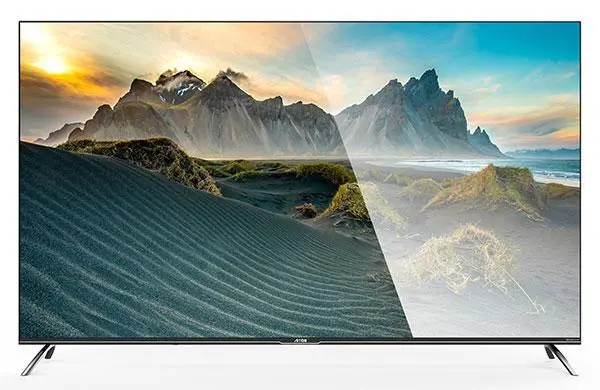
Despite many improvements, most LCD screens still have a somewhat significant drawback: a limited viewing angle. This means the picture looks its best only from a relatively narrow spot directly in front of the screen.
We recommend checking the viewing angle by looking at the TV from the sides and from above and below the main part of the screen. As you move away from the center, the image can dim, lose contrast and color accuracy, or appear washed out. The degree of image degradation varies from model to model. TVs using IPS LCD panels generally offer wider-than-average viewing angles for LCDs, although this can sometimes come at the expense of contrast.
By contrast, OLED TVs have nearly unlimited viewing angles, similar to the old plasma TVs.
If you try to check a TV’s viewing angle in a store, be aware that retail display settings often boost brightness and color to unnatural levels, which can artificially improve off-angle viewing. Whatever you see in the store, it’s important to check the viewing angle again once the TV is set up in your home. We suggest doing this immediately so you can return the set easily if it proves disappointing.
